

Cracked heels have a will of their own and always pop up when you need them the least (do you need them anytime, though?) Jokes aside, I am here to help you with my go-to homemade foot cream made with coconut and beeswax.
It will bring extra moisture to your feet and repair those cracked heels, helping you feel comfortable once again. And save a few pairs of socks in the mean time.
I’ll also tell you what no homemade balm can do, and which store-bought ingredient is worth knowing about if your heels are stubborn. A cream you make at home works best when you start with realistic expectations.
So let’s get this started!
Coconut Oil, Shea Butter and Beeswax Foot Cream Ingredients
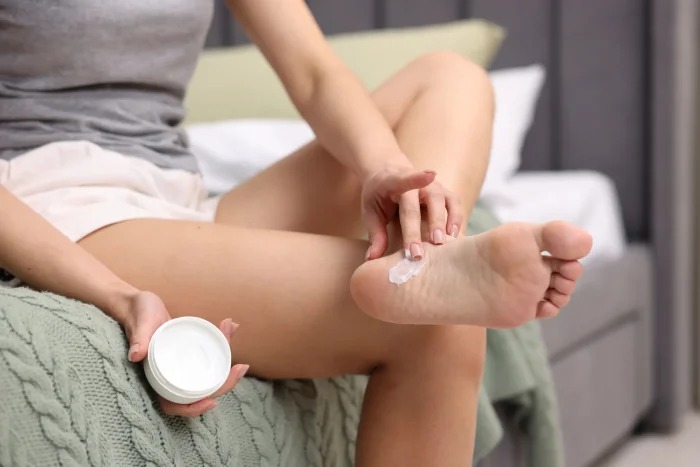
We’re providing Amazon links to each of the ingredients in case you don’t have them at home. These are affiliate links that we get commissions from, without any extra costs for you.
- ½ cup unrefined shea butter
- 2 tbsp coconut oil (read my in-depth review of the Nutiva coconut oil, my all-time favorite)
- 1 tbsp beeswax pastilles
- 1 tbsp avocado oil
- 20 drops tea tree essential oil
- 10 drops peppermint essential oil
Note: you can use other natural essential oils if you want (like vanilla, for example, for a nice perfume), but we recommend sticking with the two above as they also come with added benefits.
Besides the ingredients, you’ll need a double boiler (or a heatproof bowl over a saucepan of simmering water), a spatula, a hand mixer, a clean glass jar of about 200 ml (6 to 7 oz), and a pumice stone for later.
At the amounts above, the oils make up roughly 1% of the finished balm or less, which sits inside the 1 to 2% range commonly given for skin use. Adding more raises the odds of irritation without making a better balm.
Here’s what each ingredient does in the jar, and what the evidence does and doesn’t back up.
Shea Butter – Extracted from the Karite tree found in Africa, raw and unrefined shea butter is what you need to use. It has a high vitamin A and vitamin K content which provides intense nourishment to dry skin.
If your cracked heels bleed and are painful, shea butter promotes quick healing!
Coconut Oil – This coconutty goodness is ideal for moisturizing dry wrinkled and flaky skin which is what many mild cases of cracked heels look like.
Because it has a small molecular structure, it’s easily soaked up by the skin leading to instant moisturization.
Coconut oil is also antibacterial due to its high lauric acid content so it’s good for staving off germs on your heels.
Beeswax – Its job here is structure. It thickens the mix and forms a barrier that slows moisture loss, so the cream stays on your heel instead of soaking into your sock.
Beeswax is also antibacterial, it encourages wound healing, gives relief to itchy cracked heels as well as promotes cell turn over which is important for healing cracked heels!
Avocado Oil – It’s a light, liquid oil that softens the texture, so the cream spreads easily over thick, stiff skin.
Tea Tree Essential Oil – Tea tree has antifungal and antiseptic activity in lab studies, and athlete’s foot can sometimes play a part in cracked heels. But research on its use in people is limited, so I treat it as a clean, medicinal scent rather than a treatment.
Peppermint Essential Oil – It gives a cooling, tingly feeling that tired heels love. Menthol is an irritant on broken skin, so keep it away from open cracks.
If you want the all the best ingredients but you don’t really want to prepare your own at home, you could also check out the Onyx Professional Cracked Heel Treatment (affiliate link). We love it, and it can’t get easier than ordering with one click!
Also read: How to Get Garlic Smell Out of Plastic Containers
Coconut Oil, Shea Butter and Beeswax Foot Cream Preparation
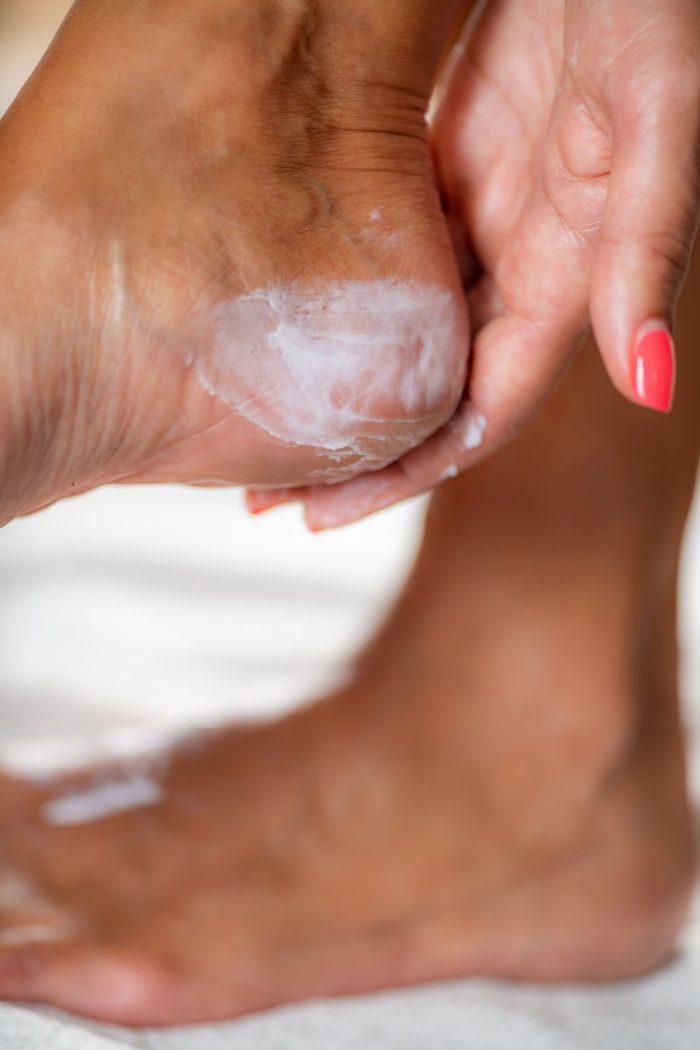
Now that you have all the right ingredients, it’s time to put them to good use and prepare your perfect foot cream!
- In a double boiler, melt the shea butter, beeswax, coconut oil and avocado oil over gentle heat, stirring until completely liquid.
- Take it off the heat and let it cool for a few minutes.
- Put it in the freezer for about 10 minutes, until it’s partly set but still soft in the middle. Check it every few minutes, since freezers vary. A fast chill like this helps the shea set smoothly.
- Add the essential oils now, just before whipping. Essential oils are heat-sensitive, so adding them to hot liquid costs you scent.
- Whip with a hand mixer until the mixture turns light, fluffy and buttery. Unrefined shea is ivory to beige, so don’t expect pure white.
- Spoon it into a clean jar and store it somewhere cool. It keeps firming up over the next day or so.
Note: If your cream turns out grainy, the shea probably cooled too slowly. Melt it all the way down again and chill it faster.
How To Use Shea Butter and Beeswax Foot Cream
If you want to heal your cracked heels and keep them lubricated, follow these steps every night before bed!
- Wash your feet with warm water and a mild soap.
- Place a bit of soap on the Pumice stone and start scrubbing your heels for about 10 seconds each to exfoliate dead cells and soften the rough skin.
- Rinse your feet in warm water then let your feet dry.
- Now get a dime-sized amount of the shea butter foot cream with clean fingertips and slather it on your cracked heels.
- Put on some comfortable socks and go to bed!
- The next morning, your heels will be soft, the cracks will have lessened, the pain/burning gone plus feel lubricated and fresh!
Notes:
- This shea butter foot cream has a shelf life of over 6 months but it’ll probably get used up before that time! Just keep it away from tap water and other contaminants and use clean fingertips to scoop it up.
- You can also use oregano essential oil as it is a very powerful anti-fungal essential oil!
- To care for your cracked heels, foot soaks are a must at least every weekend. Here is how to do it:
Simply fill a tub with a gallon of hot water (as hot as your skin can handle), add ¼ cup of Epsom salts, 7 drops of tea tree essential oil and ¼ cup of unfiltered apple cider vinegar or lemon juice. Soak for about 15 minutes then lubricate your feet with the foot cream.
Also read: Best Coconut Oil Toothpaste for Perfect Teeth
Why Heels Crack, and What a Balm Can (and Can’t) Do
Your heels take your full body weight with every step, and the skin there has to stretch sideways under that pressure. When it’s dry and thickened, it loses its give and splits.
Long hours on your feet, open-back shoes, dry or cold weather, age and skin conditions all make cracking more likely. So do medical issues such as diabetes and thyroid problems.
That tells you what a rich balm can do. It softens the skin, slows moisture loss and puts a protective layer over the surface, so thick skin can relax and shallow cracks can close. What it can’t do is dissolve heavily hardened skin quickly, or fix an underlying medical cause.
Deep cracks that bleed, hurt, or look infected can lead to skin infections. Those need a doctor or podiatrist. And if you have diabetes, check with your doctor before putting anything new on your feet.
Also read: Best Coconut Oil Creams and Lotions for Face Wrinkles
Conclusion
Now you’ve learned how to make your own coconut oil & Shea butter foot cream. You have learned all the benefits it provides but you really need to just try it yourself and see how good it is.
It will keep your feet well moisturized and sooner rather than later, those cracked heels you seemed unable to get rid of will become a thing of the past!