

Do you color your hair at home? Have you ever used one of those progressive dyes that changes your hair color gradually to look more natural?
If you did, then most likely these are metallic dyes, which are usually bad for your hair. Today, we’re going to learn everything about these metallic dyes and specifically why they are bad.
As you will see, the answer is more complicated than simply saying that all “metallic dyes” are bad for your hair.
The term itself causes a lot of confusion. Some progressive hair dyes have historically used metallic compounds like silver, copper or bismuth, while a hair color that gives you an instant silver or metallic-looking result is a different type of product altogether.
And one of the ingredients that made older progressive dyes particularly controversial, lead acetate, is no longer permitted for scalp hair coloring in the United States and is prohibited in EU cosmetics.
Professionals do not use these harmful products. But some people giving themselves home perms on top of metallic dyes might, even though they do not mix! (By the way – read how to get that perm smell out of your hair!)
What Are Metallic Hair Dyes?
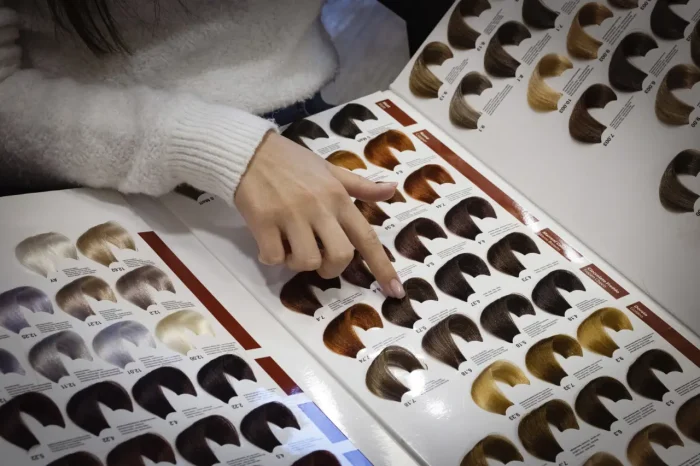
When I use the term “metallic hair dye” in this article, I’m referring to the type of hair-color product traditionally associated with progressive coloring, where repeated applications gradually darken the hair.
This is very different from a modern hair color marketed as giving you a metallic, silver or grey appearance.
A silver hair dye that gives you an instant metallic-looking color is not automatically a “metallic dye” in the progressive-dye sense. The word metallic may simply describe the shade or finish.
You cannot determine the ingredients from the name or the color alone, so I would always check the ingredient list and the product instructions before making assumptions about what is actually in the bottle.
The FDA currently identifies bismuth citrate as one ingredient used in hair dyes that may darken hair gradually with repeated applications. The FDA also distinguishes these products from other types of hair-coloring products, including conventional synthetic-organic hair dyes.
So if you have a product that promises to make your hair darker gradually, don’t automatically assume that it contains lead or another dangerous metal. The actual formulation matters.
Also read: How to Stop Your Period for a Day (or Night)
Why Have Metallic and Progressive Hair Dyes Been Considered Dangerous?
Metallic hair dyes have a bad reputation for a reason, but fortunately, most of these are no longer of concern nowadays, and are based on older formulations.
As I mentioned in the intro, some of the old metallic dyes used various ingredients that were toxic. Since 2022 in the US and also in the European Union, the authorization for lead acetate as a color additive in cosmetics intended to color scalp hair was removed.
However, just because these regulations are in place, doesn’t mean you shouldn’t be extra careful. Just read the list of ingredients and if you see lead acetate, or any of the other harmful substances, simply don’t buy it!
Does That Mean All Metallic Hair Dyes Are Dangerous?
No.
“Metallic” is not a useful synonym for “dangerous.” Different metallic compounds have different properties, and the safety of a hair-color product depends on its actual ingredients, concentration, intended use and directions.
For example, the FDA currently lists bismuth citrate among color additives approved for use in hair and notes that it is used in hair dyes that may darken hair gradually with repeated applications. I would still not use it, but you should know that it is an approved ingredient.
Also read: Best Waterproof Eyebrow Pencil for Swimming
The Difference Between a Metallic Hair Color and a Metallic-Salt Hair Dye
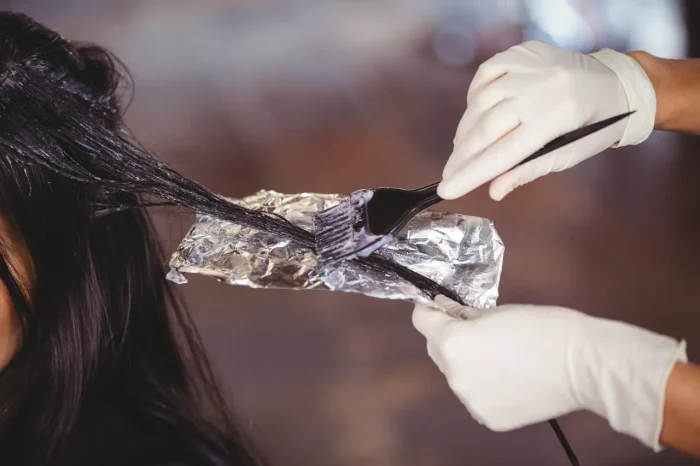
I think this distinction deserves special attention because it is easy to get confused.
The hair dyes that promise a metallic effect, such as an instant silver or grey appearance, are not automatically the same thing as progressive dyes that have historically relied on metallic compounds.
A product can give your hair a metallic-looking finish without being a “metallic dye” in the sense discussed in this article.
So if you see a product advertised as a metallic silver, metallic grey or similar shade, don’t assume from the marketing language alone that it contains a metallic salt associated with progressive coloring. Check the ingredient list and follow the manufacturer’s instructions.
What About Lead Acetate in Older Hair Dyes?
If you’ve heard stories about progressive hair dyes causing lead poisoning, this is where some of those stories come from.
Lead acetate was historically used in progressive hair dyes, but even so, the FDA did not state that it had established that lead acetate in scalp hair dyes caused harm under the previously authorized conditions of use.
Its regulatory decision was based on the fact that the available information no longer provided the required reasonable certainty of no harm.
So it might have caused harm, but it’s not verified. So if you still have an old product at home and you are unsure what it contains, don’t guess. Check the packaging and ingredient information, and if necessary contact the manufacturer. I would not use an unidentified old hair-color product simply because it worked well in the past.
Also read: Best Gum for Bad Breath
What Other Ingredients Are Used in Progressive Hair Dyes?
Finally, it’s worth noting that not every progressive hair dye uses the same chemistry.
That is important because it means you should not look at the words “progressive dye” and assume you already know what is inside the product.
What Can Metallic or Progressive Dyes Do to Your Hair?
A hair-color product can cause dryness, brittleness, breakage or other hair problems without necessarily causing systemic poisoning. The way the product is formulated and the way you use it both matter.
Hair dye can also cause irritation or an allergic reaction. Some hair dyes can cause allergic reactions or sensitization, including reactions in people who previously used hair dye without a problem.
The agency specifically identifies p-phenylenediamine, or PPD, as an ingredient that has been implicated prominently in hair-dye allergic reactions.
That is another reason I would not put every possible problem under the heading of “metallic dye toxicity.”
If your scalp becomes irritated, you develop a rash, or you experience burning, itching or swelling after using a hair dye, stop using the product and seek appropriate medical advice.
How Can You Tell What Is Actually in Your Hair Dye?
If you’re a home colorist, the simplest thing you can do is read the product information instead of trying to identify the chemistry from the advertising.
Look at the ingredient list and the instructions on the packaging. If the product is supposed to darken hair progressively, pay particular attention to the ingredients responsible for that color change.
Don’t assume that every product described as “progressive” contains lead, and don’t assume that every product described as “metallic” contains a metallic salt.
I also recommend keeping the box, bottle or a photograph of the ingredient list until you have finished using the product. If something goes wrong, knowing exactly what you applied to your hair can be much more useful than trying to remember the name of the product later.