

Medical Disclaimer: This article reflects personal experience and researched information, but it’s not a substitute for professional medical advice. If you have persistent pain, swelling, a known joint condition, or any injury, consult a doctor or physical therapist before trying to manipulate your joints. Never force a joint past its comfortable range.
I’ll be upfront: I’m one of those people who love cracking my toes and feet. That deep, dull urge builds up, and the moment I get that soft pop, it’s a wave of relief. If you’re reading this, you probably know exactly what I mean.
“Cracking” a joint is the action of moving a joint past its normal range of motion to produce a cracking sound and alleviate a cramp-like sensation in the muscles around it.
Cracks can be heard as loud pops due to small intervertebral explosions that occur during the rapid change in joint angle.
This article will discuss ways to crack your feet, ankles, and toes. Some people cannot do it themselves, but some can easily do it and they even have a weird fascination for cracking their feet and just love the sound that comes from it.
Cracking your feet or toes can become a habit, so be careful when cracking them – if you start, you might never be able to stop. I say that from my personal experience – a friend of mine cracked my toes once and I’ve been doing it ever since!
Also read: How to Shrink a Pair of Socks
What Actually Happens When a Joint Cracks
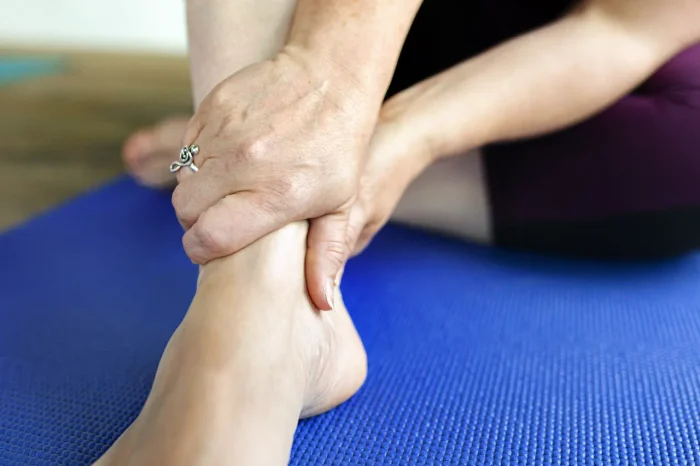
Most people I meet still believe the pop is caused by bones grinding together or a tendon snapping out of place. Neither is true.
The real mechanism, backed by MRI studies as recently as 2015, is something called cavitation. Inside every synovial joint, including those in your feet and ankles, there’s a lubricating fluid rich with dissolved gases like carbon dioxide and nitrogen.
When you stretch the joint quickly, you create a sudden drop in pressure. That drop pulls those dissolved gases out of solution to form a tiny bubble, and the formation itself makes the popping sound. It’s not an explosion, and despite what you might have read, it has nothing to do with your spine.
You might notice you can’t crack the same joint again immediately. That’s the refractory period, it takes about 15 to 30 minutes for the gases to dissolve back into the fluid before the joint will crack again.
Is Cracking Your Feet, Ankles, or Toes Bad for You?
This is the first question everyone asks, and the short answer is: probably not, as long as you’re doing it gently and without pain. But the long answer deserves more care than a one-liner.
There’s a famous story about a doctor who cracked the knuckles on only one hand for over 60 years to prove it didn’t cause arthritis. It’s a fun anecdote, and I’ve cracked my toes daily for more than a decade without issues, but we can’t treat that as solid proof.
The doctor’s self-experiment was just that: an experiment on one person, on his hands, not his feet. The joints in your feet bear your entire body weight and have a more complex ligament architecture.
A large-scale study on knuckle cracking didn’t find a link to arthritis, but it did note a slightly higher incidence of hand swelling and reduced grip strength in habitual crackers. Whether that translates to feet is uncertain.
Here’s what I’m comfortable saying based on the current evidence and the consensus among physical therapists I’ve spoken with: Self-cracking, when it produces a quick release without sharp pain, is not known to cause arthritis or permanent damage.
However, if you’re aggressive, twist with too much force, or ignore pain signals, you can strain ligaments, irritate joint capsules, or even sublux a tendon.
People with hypermobility syndromes, Ehlers-Danlos, rheumatoid arthritis, gout, or diabetic neuropathy need to be especially careful.
A joint that already has looser connective tissue can become unstable if you repeatedly yank it around.
I never crack a joint if there’s swelling, warmth, or a grinding sensation (crepitus) that feels like sandpaper rather than a clean pop. And if anyone else tries to crack your joints for you, the risk goes up because they can’t feel your body’s limits.
What is the best way to crack your feet?

The best way to crack your feet is to lay flat on the floor, with one foot close and stretched out, then gently rotate your heel up towards your buttock while pulling it inward with the other hand.
If you find the right spot there should be no pain and a soft pop sound is produced when done correctly.
Also read: Can you wear ripped jeans to church?
What is the best way to crack your toes?

My favorite way of cracking my toes is when standing up – it’s the easiest way to do it. Have in mind that you should not wear any shoes in order to do it – wearing socks is OK, though.
In order to crack your toes, when standing, simply lift your foot and place your toes on the floor, then gently press so they twist towards the heel. You will hear them pop instantly.
Alternately, you can lay in your bed with your feet close to you. Place a hand over your toes and gently push them down, towards the base of the foot/heel until they crack. Do the same with the other foot.
How do you crack your ankles?

You can crack your ankles by standing up, supporting yourself with one hand on something sturdy. Lift your feed and stretch it down towards the floor as if you were planning to sit on your toes like a ballerina.
When your feet are fully stretched, start rotating it in any direction until you hear your ankle crack.
Also read: Animals that Are Now Extinct Because of Humans
Why does the side of my foot feel like it needs to crack?
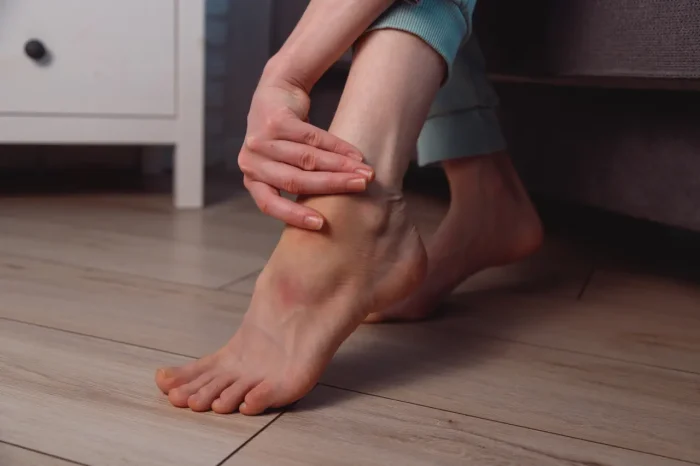
The feeling you get on the outside edge of your foot, that stubborn ache that only a pop seems to fix, often comes from a buildup of tension in the small joints between the metatarsal bones and the cuboid or cuneiforms.
When you stand, walk, or wear stiff shoes, those joints can get compressed. The synovial fluid and surrounding soft tissues can create a sensation of pressure.
You might also feel it after sitting for a long time, when the lubricating fluid temporarily becomes more viscous and the joint capsule feels “gummy.”
Cracking it stretches the capsule, redistributes the fluid, and gives a brief neurophysiological reset that feels like a release.
It’s harmless unless you need to do it constantly because of underlying instability or a nerve entrapment, like tarsal tunnel syndrome, which would also come with tingling, numbness, or burning.
Also read: 10 Surprising Facts about Women
Conclusion
Cracking your foot, ankle, or toes doesn’t have to be a guilty secret, and it isn’t the destructive habit your parents might have warned about.
The sound comes from a harmless gas bubble forming inside the joint fluid, not from anything breaking or tearing. I’ve refined the methods I shared here over years of personal practice, and they remain my favorite ways to get that satisfying release without pain.
If you feel any sort of sharp pain when cracking your joints then stop immediately. Do not continue to crack them because it will only make things worse, and could cause permanent damage.
Cracking for the pleasure of it, done mindfully, is perfectly fine. And now you know how to do it right.